An exhibition catalog · 2025
NOX LUX
A sound work by Aaron Drake & Marcos Lutyens — the annual cycle of daylight rendered as a continuously evolving frequency architecture.
Composer
Aaron Drake
Artist
Marcos Lutyens
Year
2025
Format
Album · Live Induction
Premiere
GAM Torino · 21 Jun 2025
Preamble
NOX LUX translates one full revolution of the Earth around the Sun into a single, continuous score. Daylight is the material; the year is the form. The work asks the listener to hold attention for the length of a season — and then a year.
II
The Solar Map
Daylight duration mapped to frequency.
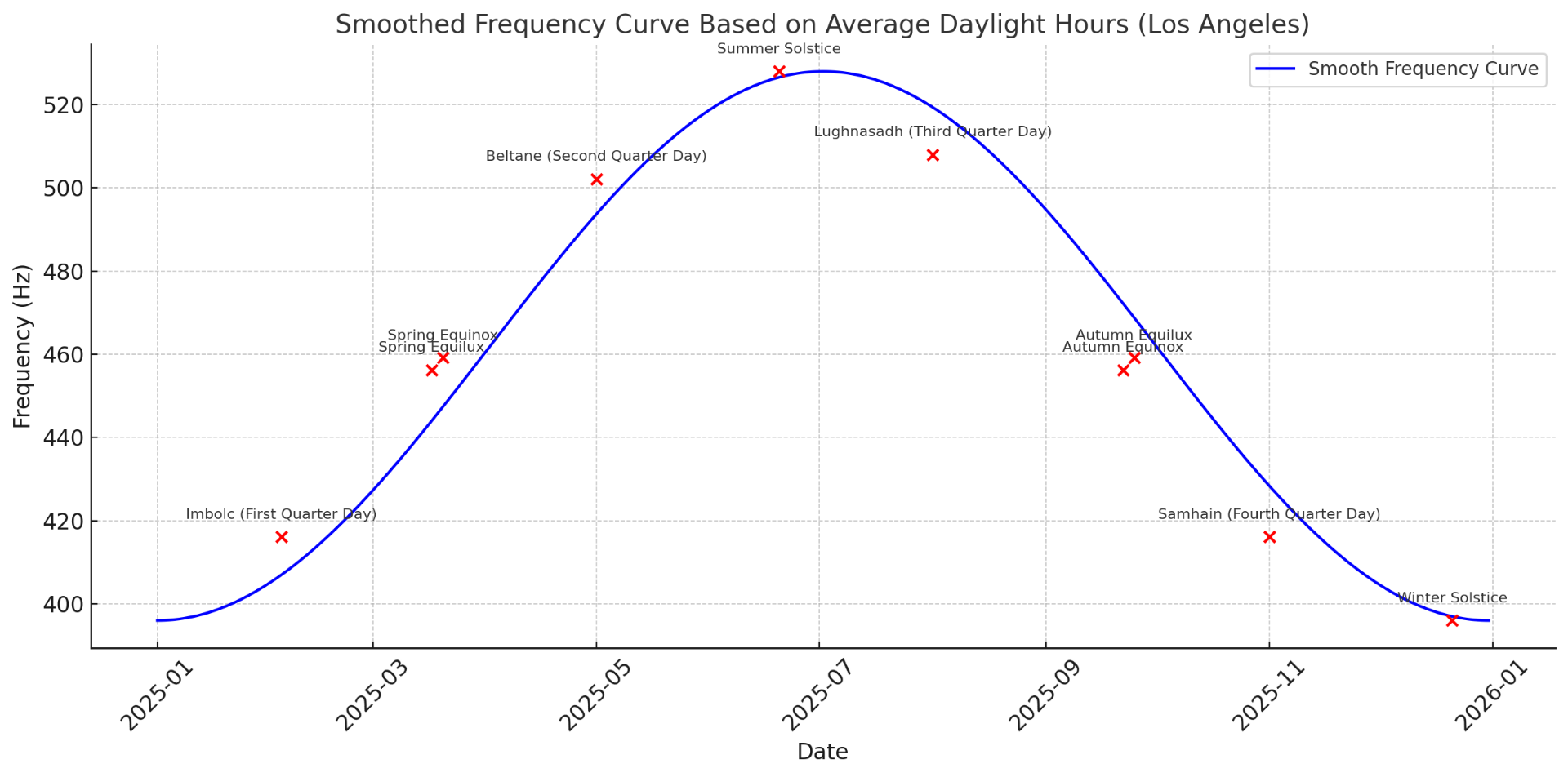
The carrier frequency of NOX LUX is drawn directly from astronomical daylight tables for Los Angeles. The Winter Solstice grounds the work at its lowest tone (~396 Hz); the Summer Solstice lifts it to its ceiling (~528 Hz). Equinoxes and cross-quarter days — Imbolc, Beltane, Lughnasadh, Samhain — sit on the curve as structural anchors. The score is not composed against the year; it is composed by it.
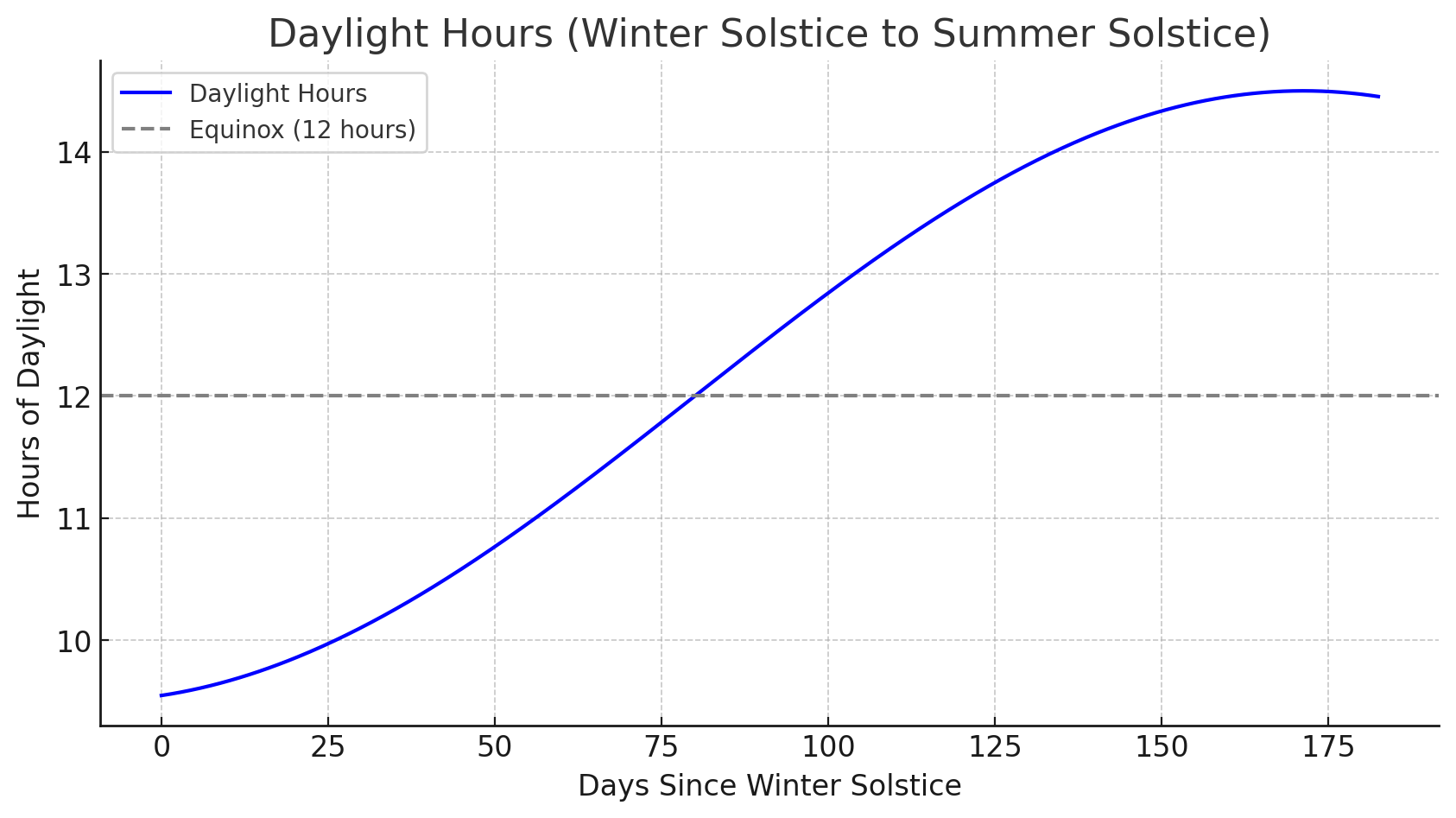
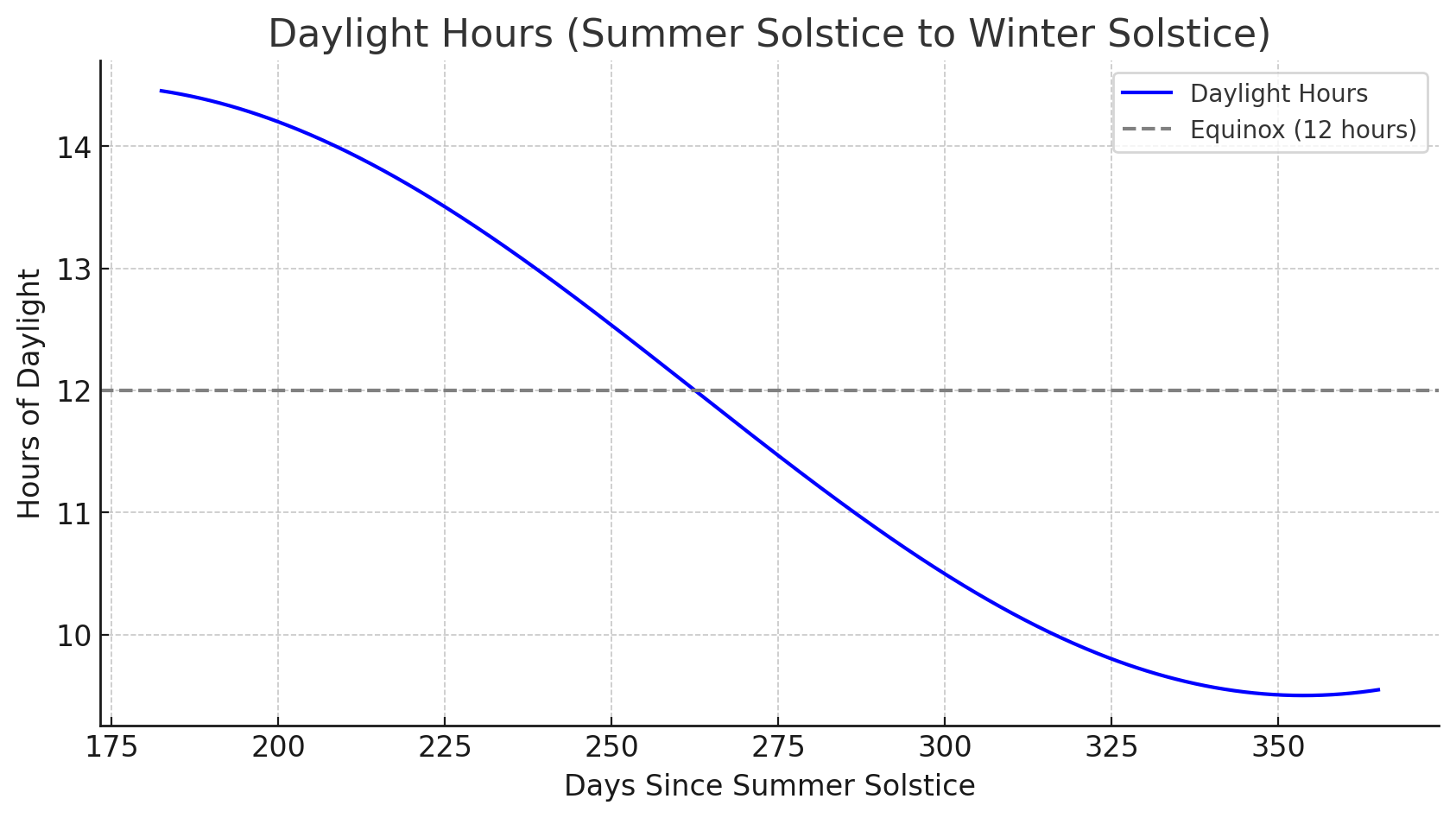
The annual envelope of daylight is a single continuous sine. Read forward from one solstice and backward from the next, the two halves mirror one another: the same arc, inverted in time. NOX LUX uses this symmetry as its largest formal gesture.
III
The Year in Motion
Rate-of-change of daylight, summer → winter, winter → summer.
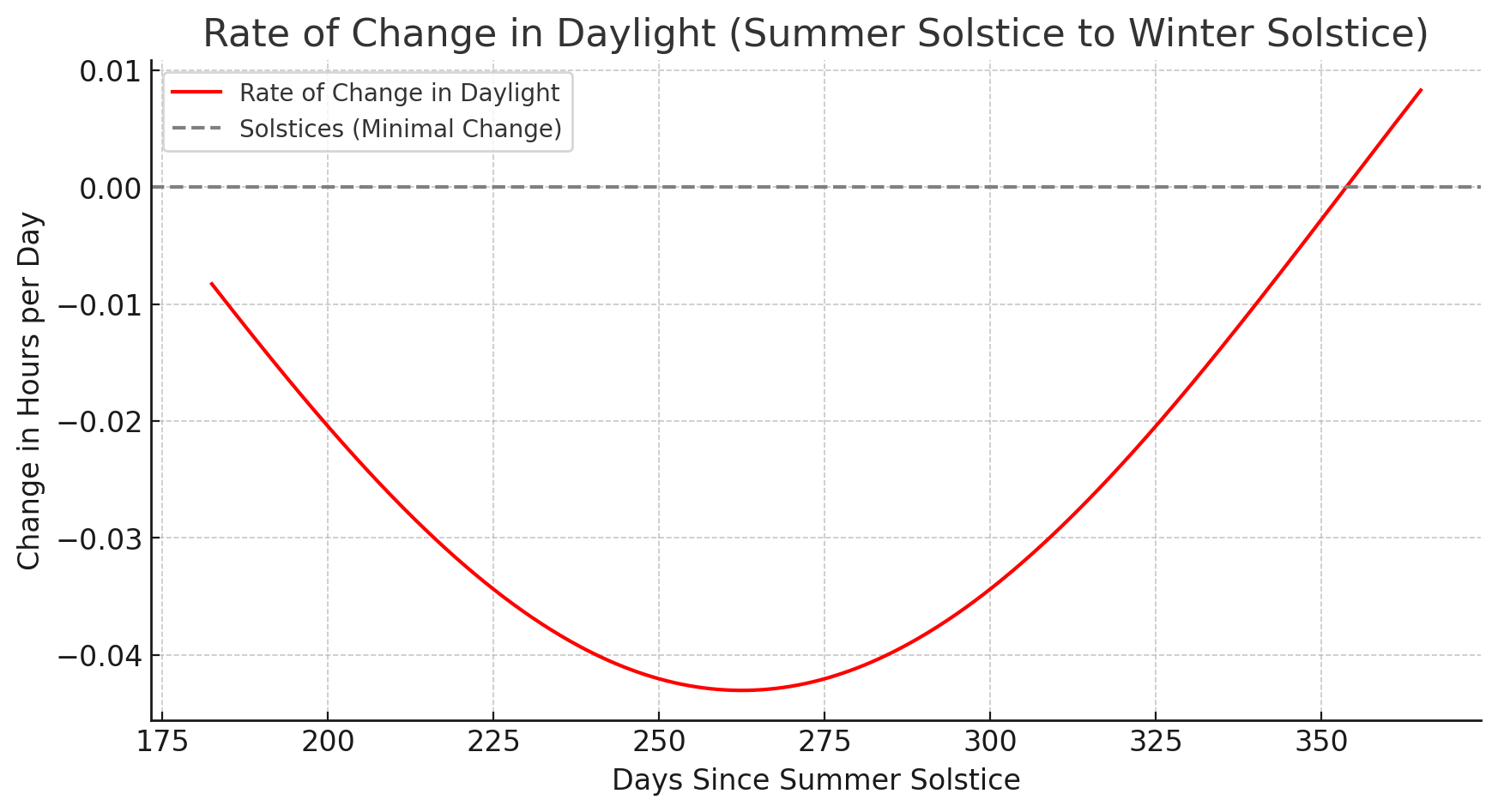
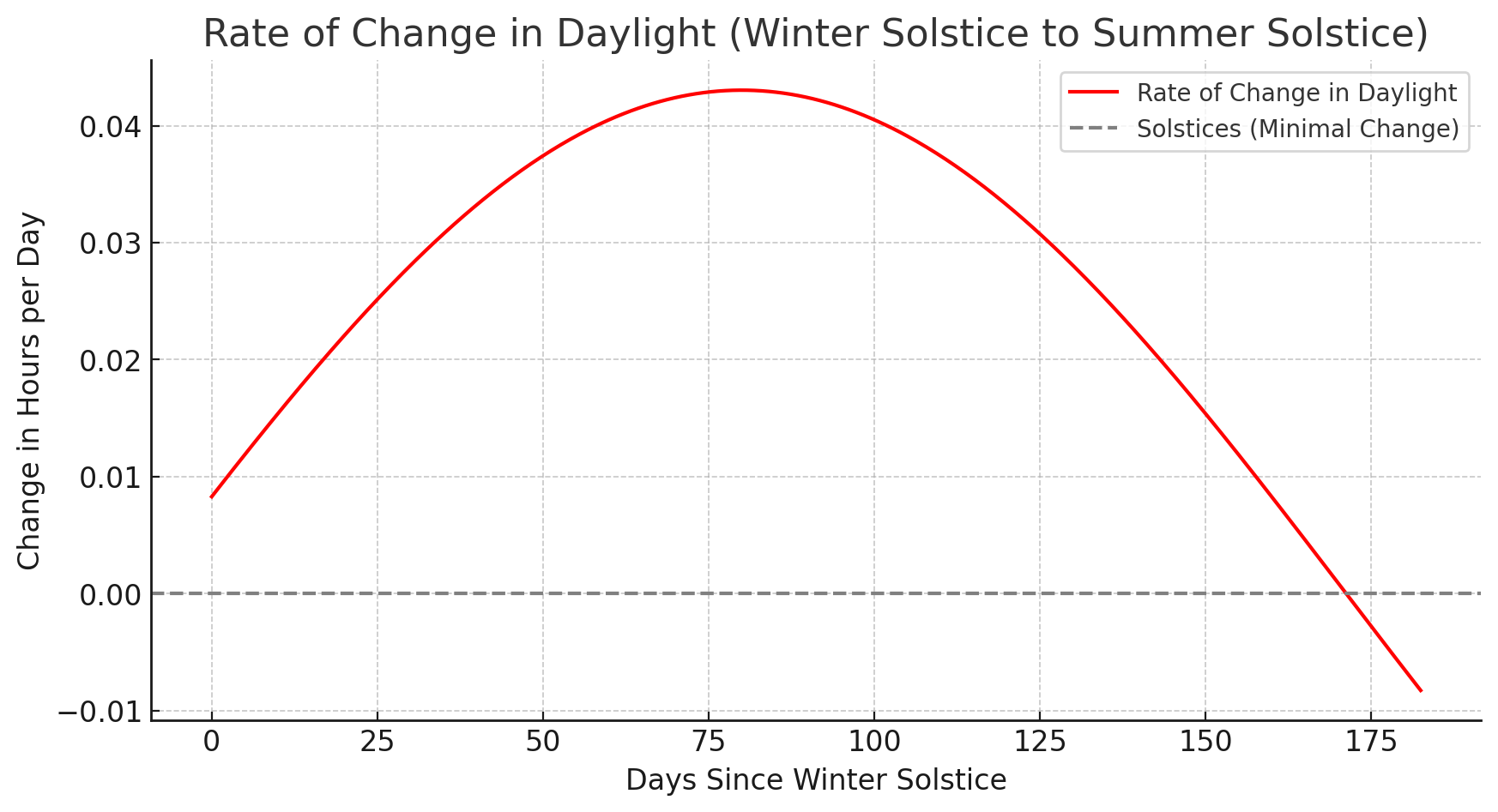
The fastest perceptual change in light does not happen at the solstices — it happens at the equinoxes, where the rate-of-change peaks at roughly two-and-a-half minutes per day. NOX LUX uses this acceleration as its compositional clock. Where light moves quickest, the score drifts hardest; at the solstices, the work nearly stands still.
IV
Listening Modes
Four ways to enter the work.
Mode 01
Solar Time
Play the album in real time from the moment of a solstice. The score and the sky drift together.
Mode 02
Reclined Induction
Lie down. Allow Marcos Lutyens' verbal induction to thin attention until frequency becomes architecture.
Mode 03
Year-long Loop
Stream as ambient continuity for a calendar year. The work becomes a barometer for the season you are inside.
Mode 04
Single Sitting
Listen end to end, in a darkened room, without interruption. A 76-minute compression of one revolution.
V
Live Induction at GAM Torino
21 June 2025 · Summer Solstice · Galleria Civica d'Arte Moderna.
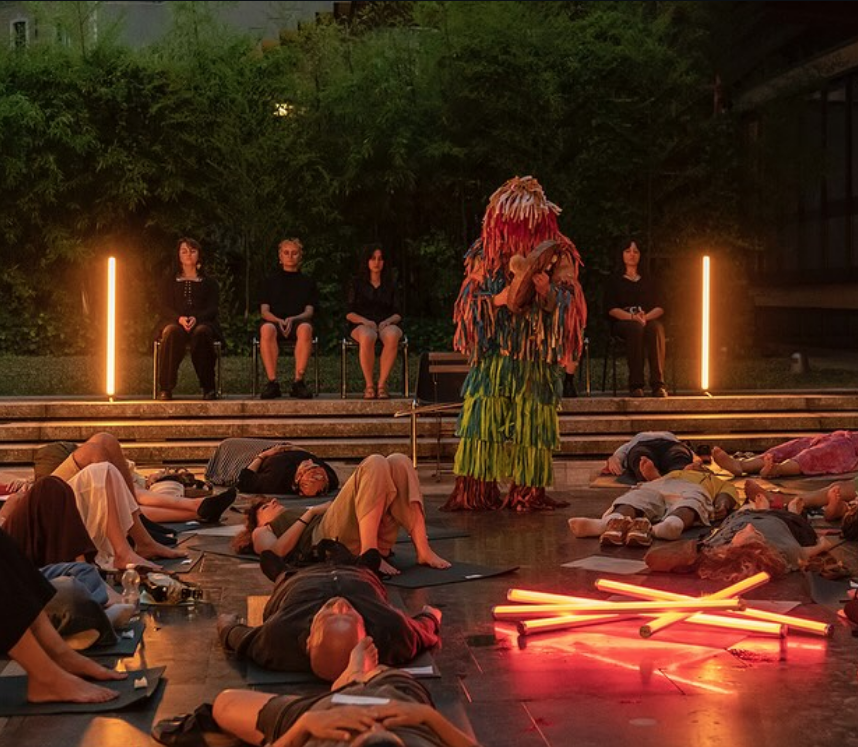
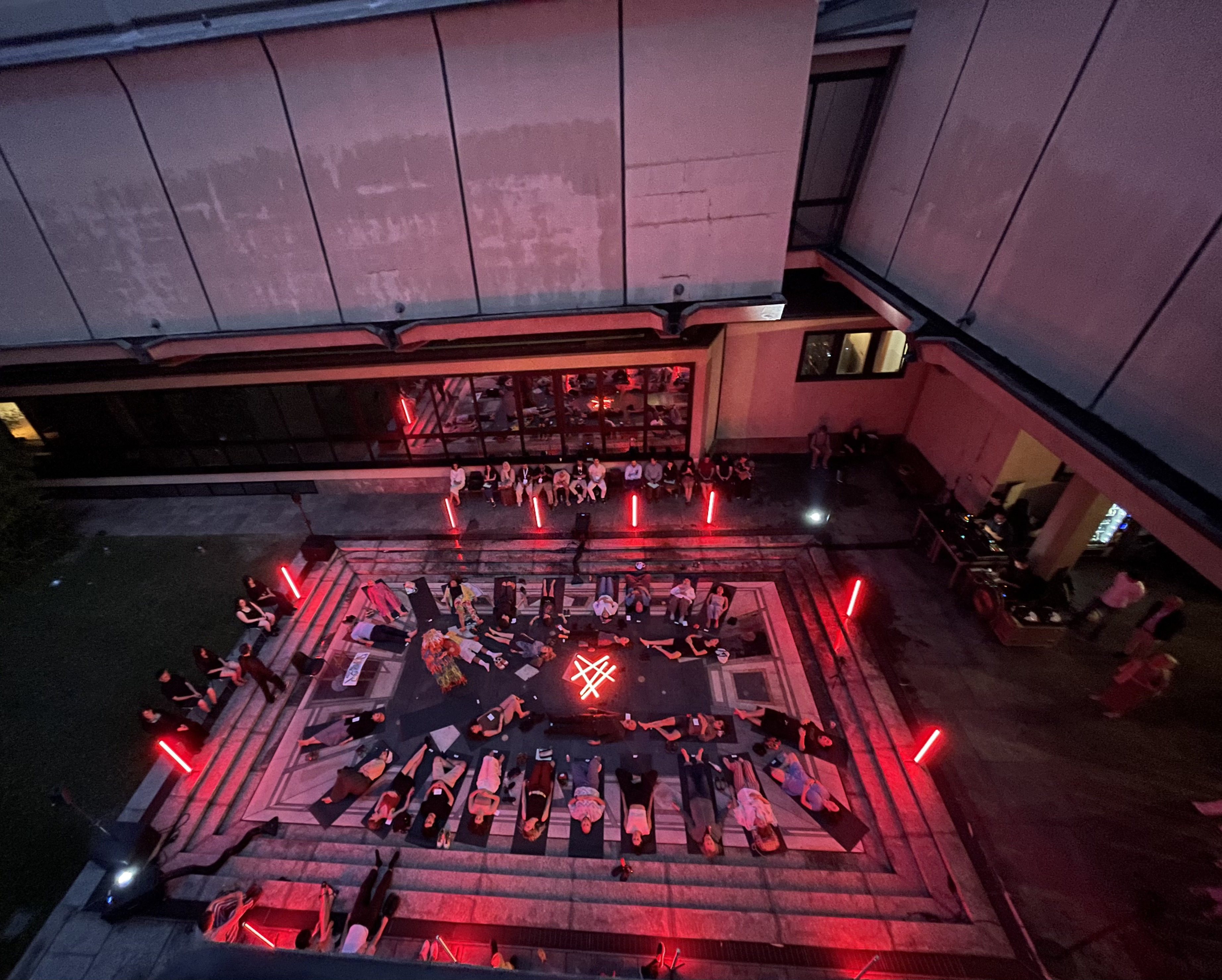
The Turin premiere unfolded outdoors as dusk fell over the gardens of GAM. A central performer — adorned in a layered ceremonial costume of cut fabric strands evoking both flora and flame — anchored the ritual, surrounded by seated initiates and warm vertical light columns.
As Lutyens guided participants through a sustained verbal induction in dialogue with Drake's slowly evolving score, the audience reclined onto mats arranged across the stone floor, forming a quiet field of listeners suspended between the architecture, the garden, and the sky. The score's frequency drifts — calibrated to the annual movement between solstice and solstice — were diffused through the courtyard so that sound, light, and breath operated as a single continuous medium.
VI
Process
From astronomical data to score to ceremony.
01
Acquisition
Daylight duration tables drawn from astronomical ephemerides at chosen latitudes. Solstices, equinoxes, and cross-quarter days fixed as structural anchors.
02
Mapping
Daylight values mapped — inverted and scaled — onto a sustained carrier frequency. The function is continuous; there are no measure-bars in the year.
03
Composition
Frequencies layered into psychoacoustic intervals chosen for sympathetic resonance with the human body in reclined position.
04
Induction
Lutyens' verbal score keyed to the same astronomical anchors, so that language, attention, and frequency move on the same clock.
05
Diffusion
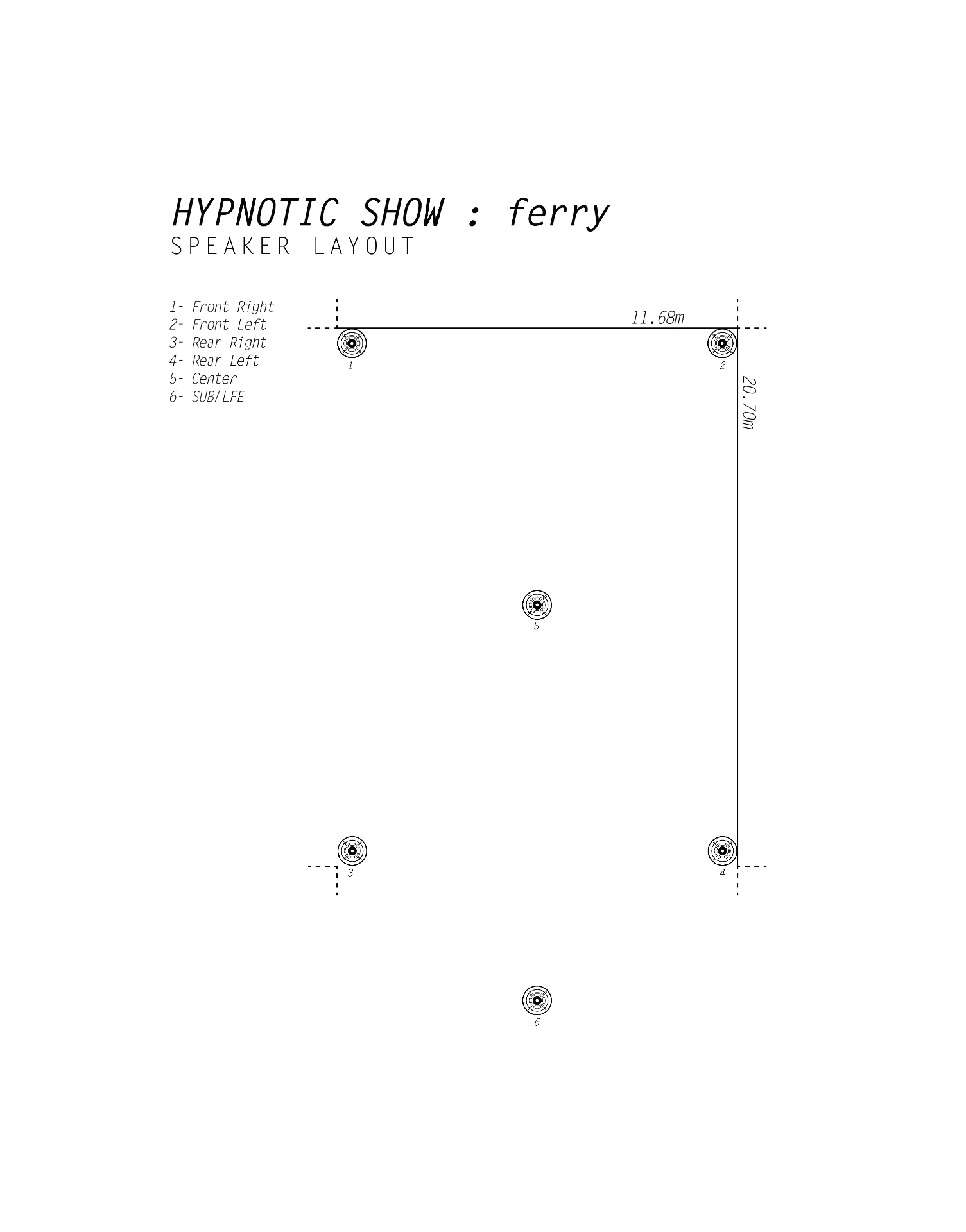
Spatialized for outdoor performance: low-end through subterranean reinforcement, upper partials placed in the canopy above the listeners.
VII
Album Notes
From the composer.
NOX LUX is a collaborative sound work by composer Aaron Drake and artist Marcos Lutyens that translates the annual cycle of daylight and darkness into an immersive musical form. Drawing on seasonal shifts between the winter and summer solstices, the album maps changes in daylight duration onto a continuously evolving frequency architecture, creating a sonic representation of the Earth's movement through the year.
Structured as two complementary sides, the work traces a cyclical journey between darkness and light, moving through solstices, equinoxes, and cross-quarter days. Frequencies gradually transform over the course of the composition, producing subtle shifts in perception and resonance that mirror the changing relationship between sunlight, time, and human experience.
Part composition, part perceptual experiment, NOX LUX continues a long-running investigation by Drake and Lutyens into sound, consciousness, attention, and altered states. The work combines minimalist musical processes, psychoacoustic phenomena, and ceremonial listening practices to create an extended environment for reflection and sensory immersion.
Rather than telling a narrative, NOX LUX functions as a temporal landscape—a musical induction that invites listeners to experience the passing of the year as an unfolding continuum of sound, duration, and transformation.
Colophon
NOX LUX — a collaborative work by Aaron Drake and Marcos Lutyens. Premiered at GAM Torino on the 2025 Summer Solstice. Produced by Sound in Space.